Оставить заявку
Заполните форму, и наш специалист проконсультирует вас по всем вопросам
Заказать услугу
Заполните форму, и наш специалист проконсультирует вас по всем вопросам
Trimiteți cererea
Completați formularul și specialistul nostru vă va consulta cu privire la toate întrebările
Comandați un serviciu
Completați formularul și specialistul nostru vă va consulta cu privire la toate întrebările
Submit a request
Fill out the form, and our specialist will provide a consultation on all your questions
Order a service
Fill out the form, and our specialist will provide a consultation on all your questions



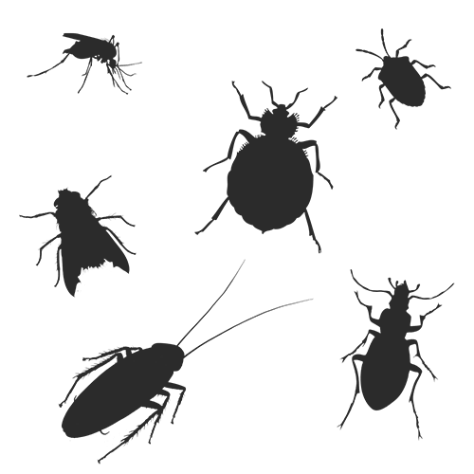


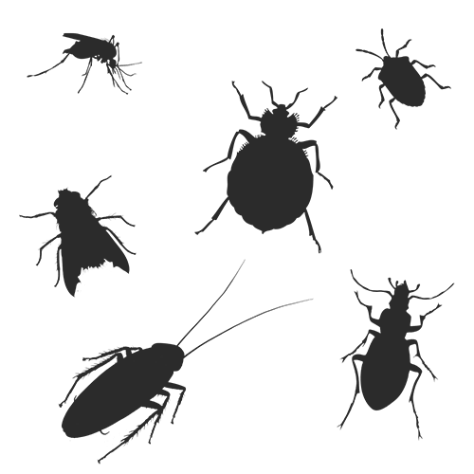
Disinsection of medical institutions
A professional treatment of medical facilities focused on eliminating insects and preventing their recurrence. Ensures a high level of sanitary safety and compliance with healthcare regulations.
Get a Free Consultation Protecting patients and staff from infection risks
Sanitary safety is a top priority in healthcare environments.
Why is disinsection in hospitals important?
Insects can carry pathogens and disrupt infection control protocols — eliminating them is crucial.
Why is disinsection in hospitals important?
Insects can carry pathogens and disrupt infection control protocols — eliminating them is crucial.
How we ensure sanitary control in healthcare facilities

-

Risk assessment and site inspection
We check patient rooms, labs, treatment areas, staff rooms, and sanitation facilities — the highest-risk spaces. -
Certified solutions for medical environments
We use approved substances suitable for medical disinsection, ensuring targeted action in hidden infestation zones. -
Recurring pest prevention
We eliminate favorable conditions and apply protective barriers to prevent reinfestation. -

Support for epidemiological control
We provide guidance that helps maintain sanitation between scheduled treatments.
If infection risks are present, we may apply disinfection as part of a complex service, or deratization if rodents are involved.
This approach to disinsection ensures complete sanitary safety for patients and staff.
We operate in Chișinău and across Moldova, in line with healthcare standards.
-
Risk assessment and site inspection
We check patient rooms, labs, treatment areas, staff rooms, and sanitation facilities — the highest-risk spaces. -
Certified solutions for medical environments
We use approved substances suitable for medical disinsection, ensuring targeted action in hidden infestation zones. -
Recurring pest prevention
We eliminate favorable conditions and apply protective barriers to prevent reinfestation. -
Support for epidemiological control
We provide guidance that helps maintain sanitation between scheduled treatments.
If infection risks are present, we may apply disinfection as part of a complex service, or deratization if rodents are involved.
This approach to disinsection ensures complete sanitary safety for patients and staff.
We operate in Chișinău and across Moldova, in line with healthcare standards.
How we work
- Free consultationYou can submit a request via our website or by phone. Our specialist will contact you to clarify the issue, provide an initial consultation, and, if necessary, dispatch an expert for an on-site inspection.01
- Inspection and diagnosticsOur specialist visits the site, assesses the extent of the infestation, identifies the sources, and develops a tailored solution.02
- Professional treatmentWe carry out pest control using effective, certified, and safe products. The methods are selected specifically for your premises.03
- Completion and recommendationsAfter treatment, we provide prevention tips, answer your questions, and, if needed, create a schedule for preventive measures.04
FAQ
Sterile zones, patient rooms, laboratories, treatment areas and restrooms — where insects may contact patients or medical materials.
Yes. The procedure follows medical protocols and does not interrupt essential healthcare operations.
Yes. Certified medical-grade solutions are used — no harmful emissions and no impact on indoor air quality.
Yes. It is a key part of infection control and reduces the risk of fines or compliance issues during inspections.
Yes. Preventive treatment helps avoid infestations and maintain sanitary standards consistently.
Yes. We issue official reports and recommendations for regulatory compliance.
Blog
Effective pest control
© 2025 Profilactix.
Designed by Targetolog.md.
Designed by Targetolog.md.