Оставить заявку
Заполните форму, и наш специалист проконсультирует вас по всем вопросам
Заказать услугу
Заполните форму, и наш специалист проконсультирует вас по всем вопросам
Trimiteți cererea
Completați formularul și specialistul nostru vă va consulta cu privire la toate întrebările
Comandați un serviciu
Completați formularul și specialistul nostru vă va consulta cu privire la toate întrebările
Submit a request
Fill out the form, and our specialist will provide a consultation on all your questions
Order a service
Fill out the form, and our specialist will provide a consultation on all your questions

How to Get Rid of Flies for Good: Household and Professional Methods
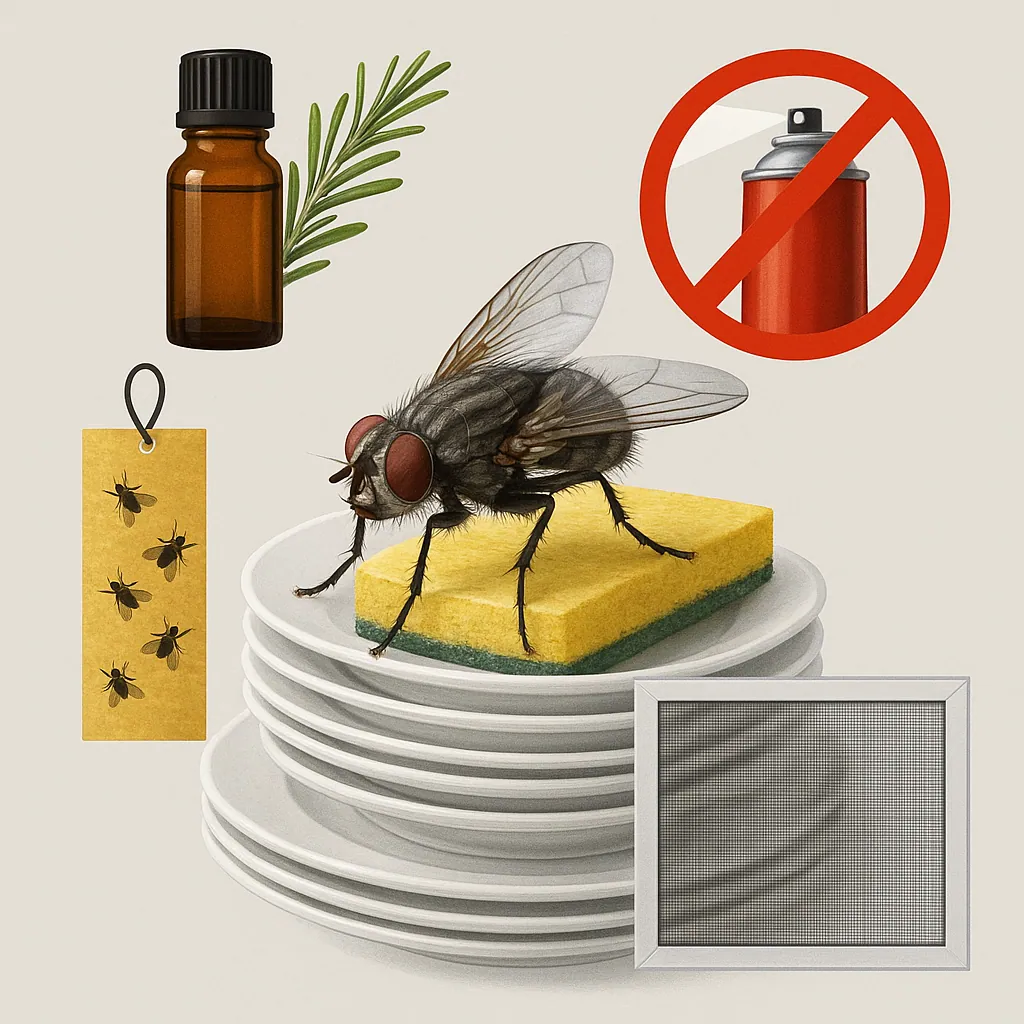
Flies in the house or at work are a common problem, especially during the warm season. Open windows, food left on the table, higher temperatures — and the natural question comes up: how to get rid of flies so they don’t return a few days later. Most people start with quick household solutions, only to notice that the effect doesn’t last long. For long-term fly elimination, it’s important to understand why flies appear and how household methods differ from professional ones.
Why Flies Appear in Homes and Indoor Spaces
There are always clear reasons why flies appear. In most cases, the problem starts when a space becomes convenient for feeding and breeding.
Flies are mainly attracted by:
Flies are mainly attracted by:
- Food scraps, fruit, sweets, and uncovered products;
- Garbage odors and unsealed trash bags;
- Warmth and high humidity;
- Open windows, balconies, and ventilation shafts;
- Hidden areas where eggs can be laid.
How Dangerous Are Flies?
Flies constantly move between trash, dirty surfaces, and food. They carry contaminants and bacteria on their bodies and legs, transferring them to kitchen counters, dishes, and food. This lowers hygiene standards and creates risks, especially in kitchens and food-handling areas.
For this reason, fly control is not only about comfort but also about maintaining basic sanitary conditions indoors.
For this reason, fly control is not only about comfort but also about maintaining basic sanitary conditions indoors.
Household Methods for Fly Control
When flies appear, most people first turn to simple household solutions for flies.
Natural remedies
Common options include:
- Essential oils with strong scents;
- Aromatic plants placed on windowsills;
- Vinegar-based solutions.
Traps and sticky tapes
They help reduce the number of adult flies and give visible short-term results. However, they represent only part of effective fly control, since eggs and larvae remain untouched.
Prevention
Prevention should always be used alongside other measures:
- Taking out trash regularly;
- Cleaning food residues promptly;
- Ysing insect screens on windows and doors;
- Monitoring humid areas.
Why Household Methods Don’t Get Rid of Flies for Good
The main issue is that home solutions target only visible adult flies. Eggs and larvae remain hidden:
- In ventilation systems and cracks;
- In garbage zones and storage areas;
- Behind furniture or under baseboards;
- Near buildings, in basements, or outdoor areas.
When Professional Fly Extermination Is Needed
There are clear signs that household methods are no longer enough:
Professional treatment provides long-term control rather than short-lived results.
- Flies reappear regularly despite cleaning;
- Their number keeps increasing;
- Several rooms or zones are affected;
- The problem occurs in offices, warehouses, shops, or other commercial spaces.
Professional treatment provides long-term control rather than short-lived results.
Prevention After Treatment
There are clear signs that household methods are no longer enough:
Professional treatment provides long-term control rather than short-lived results.
- Flies reappear regularly despite cleaning;
- Their number keeps increasing;
- Several rooms or zones are affected;
- The problem occurs in offices, warehouses, shops, or other commercial spaces.
Professional treatment provides long-term control rather than short-lived results.
Other articles
Effective pest control
© 2026 Profilactix.