Оставить заявку
Заполните форму, и наш специалист проконсультирует вас по всем вопросам
Заказать услугу
Заполните форму, и наш специалист проконсультирует вас по всем вопросам
Trimiteți cererea
Completați formularul și specialistul nostru vă va consulta cu privire la toate întrebările
Comandați un serviciu
Completați formularul și specialistul nostru vă va consulta cu privire la toate întrebările
Submit a request
Fill out the form, and our specialist will provide a consultation on all your questions
Order a service
Fill out the form, and our specialist will provide a consultation on all your questions

How to Get Rid of Fleas in Your Home and Apartment?
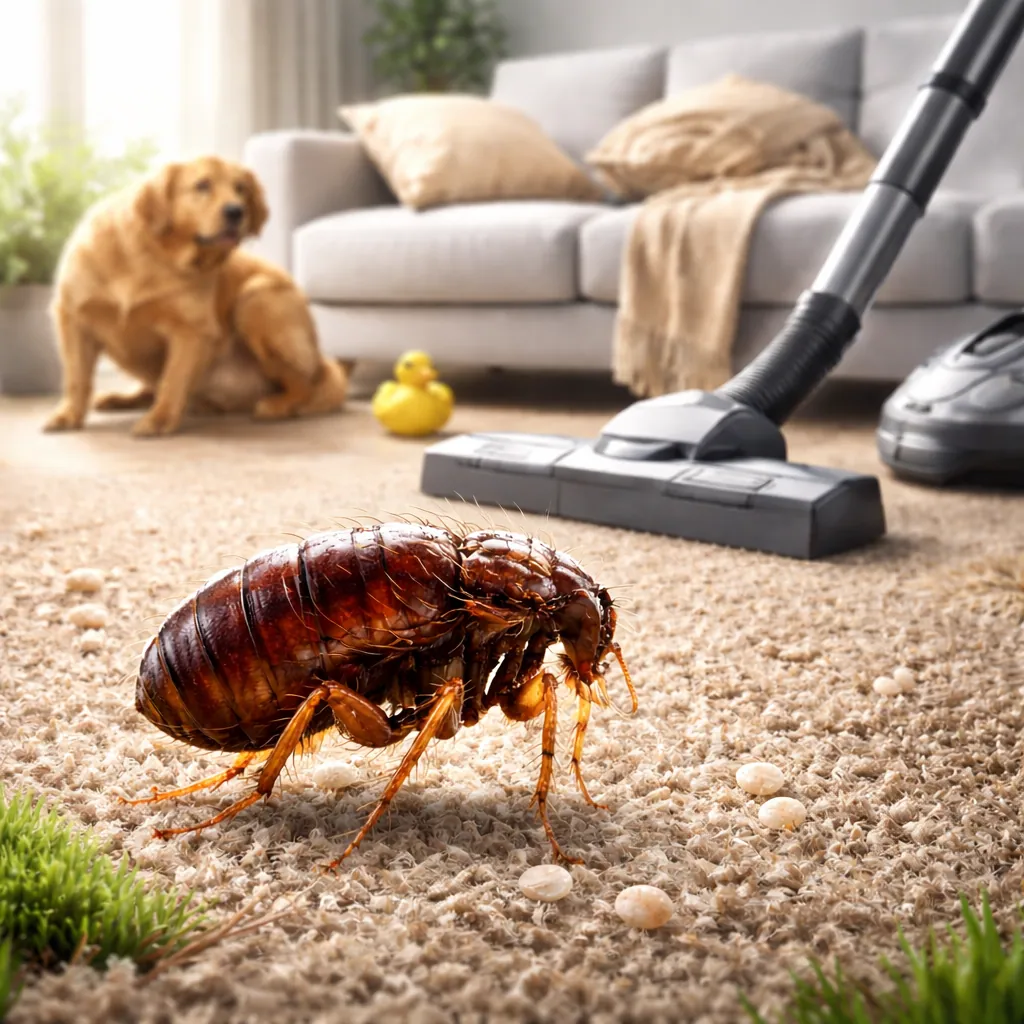
Where Fleas Come From in Your Home
Fleas can appear even in homes where there are no pets. The most common source is the outside environment: stairwells, basements, courtyards, and shared areas of apartment buildings. Fleas can be brought inside on shoes or clothing after being outdoors, as well as by pets that come into contact with infested areas.
Basements deserve special attention. When there are stray animals or rodents nearby, fleas can multiply quickly and gradually spread upward into residential spaces. It is important to understand the mechanism: fleas do not live permanently on animals. A flea can enter a home accidentally, find a warm and suitable environment, and begin its reproductive cycle. That is why fleas in the home or fleas in an apartment are not necessarily a sign of poor hygiene, but rather a combination of favorable conditions and an external source.
Basements deserve special attention. When there are stray animals or rodents nearby, fleas can multiply quickly and gradually spread upward into residential spaces. It is important to understand the mechanism: fleas do not live permanently on animals. A flea can enter a home accidentally, find a warm and suitable environment, and begin its reproductive cycle. That is why fleas in the home or fleas in an apartment are not necessarily a sign of poor hygiene, but rather a combination of favorable conditions and an external source.
How to Tell If Fleas Have Appeared in Your Apartment
The first noticeable sign is flea bites. These usually look like small red itchy spots, most often found on the legs and ankles. The reason is simple: fleas stay close to the floor and jump only short distances, making these areas the easiest targets.
Other common signs include:
Other common signs include:
- Persistent itching of the skin, especially after sleeping or spending time at home;
- Pets scratching excessively or behaving restlessly;
- Occasionally spotting the insects themselves — fleas are small, move quickly, and jump, which makes them easy to distinguish from other insects.
Where Fleas Commonly Hide
Fleas prefer warm, dark, and hard-to-reach places. They are most often found:
- Behind baseboards and in floor cracks;
- In carpets and rugs;
- In upholstered furniture, especially near the floor;
- In pet bedding, blankets, and resting areas;
- Near entrances, on doormats or around shoes.
How Dangerous Fleas Are for People and Pets
Flea bites are uncomfortable and can cause intense itching, skin irritation, and allergic reactions. Scratching increases the risk of secondary skin infections.
For pets, fleas are a constant source of stress and discomfort. Sensitive animals may develop allergic reactions to flea bites, and severe infestations can negatively affect their overall health.
The transmission of diseases through fleas is rare, but it cannot be completely ruled out. The risk depends largely on the environment where the fleas originated, especially if rodents are involved. This is why timely control is important.
For pets, fleas are a constant source of stress and discomfort. Sensitive animals may develop allergic reactions to flea bites, and severe infestations can negatively affect their overall health.
The transmission of diseases through fleas is rare, but it cannot be completely ruled out. The risk depends largely on the environment where the fleas originated, especially if rodents are involved. This is why timely control is important.
Why Fleas Come Back After Treatment
This is the key reason many people struggle to eliminate fleas completely. The flea life cycle includes several stages: egg → larva → pupa → adult flea. Adult fleas are only the visible part of the problem. A large portion of the population may exist as eggs and larvae hidden deep in carpets, cracks, under baseboards, and inside furniture.
Why fleas do not disappear immediately:
Why fleas do not disappear immediately:
- Eggs and pupae are more resistant to common household measures;
- Many stages remain hidden in inaccessible areas;
- Treating only visible surfaces does not interrupt the full life cycle.
- New adult fleas can emerge after larvae develop;
- Reinfestation can occur from external sources such as basements or shared areas.
How to Get Rid of Fleas on Your Own
If you notice fleas in your apartment, it is important to act systematically.
Treating Pets
If pets live in the home, they should be treated first. Animals can carry fleas from outside or sustain the infestation. Treatment usually includes using veterinarian-recommended flea products and thoroughly cleaning pet bedding and resting areas.
Deep Cleaning
The goal of cleaning is to remove eggs, larvae, and hidden fleas:
- vacuum carpets, furniture, baseboards, and corners thoroughly;
- properly dispose of vacuum bags or clean containers after use;
- wash fabrics that come into contact with floors or pets at high temperatures, if the material allows.
Treating the Living Space
Indoor flea treatments should be applied according to instructions. It is important to treat not only visible areas, but also baseboards, cracks, and the lower parts of furniture. Safety measures must be followed, especially in homes with children and pets.
Repeat Treatment
Many people ask how to get rid of fleas in the home permanently or how to stop fleas from returning. The answer lies in the flea life cycle. Without repeat treatment, newly emerging fleas may appear after some time.
Common mistakes that lead to temporary results:
- Treating pets but not the living space;
- Superficial cleaning that ignores hidden areas;
- Skipping repeat treatment;
- Failing to address external sources of infestation.
Natural Remedies for Fleas — Do They Really Work?
Natural remedies usually act as repellents rather than complete solutions. Strong scents may temporarily reduce flea activity, but they do not destroy eggs or larvae hidden in carpets and cracks. Used alone, these methods often delay the problem instead of solving it.
They can be used as a supplementary measure alongside proper cleaning and treatment, but not as a standalone solution.
They can be used as a supplementary measure alongside proper cleaning and treatment, but not as a standalone solution.
When Professional Flea Control Is Needed
There are situations where household methods are not sufficient:
- Flea bites continue despite repeated treatments;
- Fleas return after one or two weeks;
- The source of infestation is outside the apartment;
- There are children or sensitive pets in the home;
- Other pests appear that require a different control approach.
Other articles
Effective pest control


© 2026 Profilactix.